

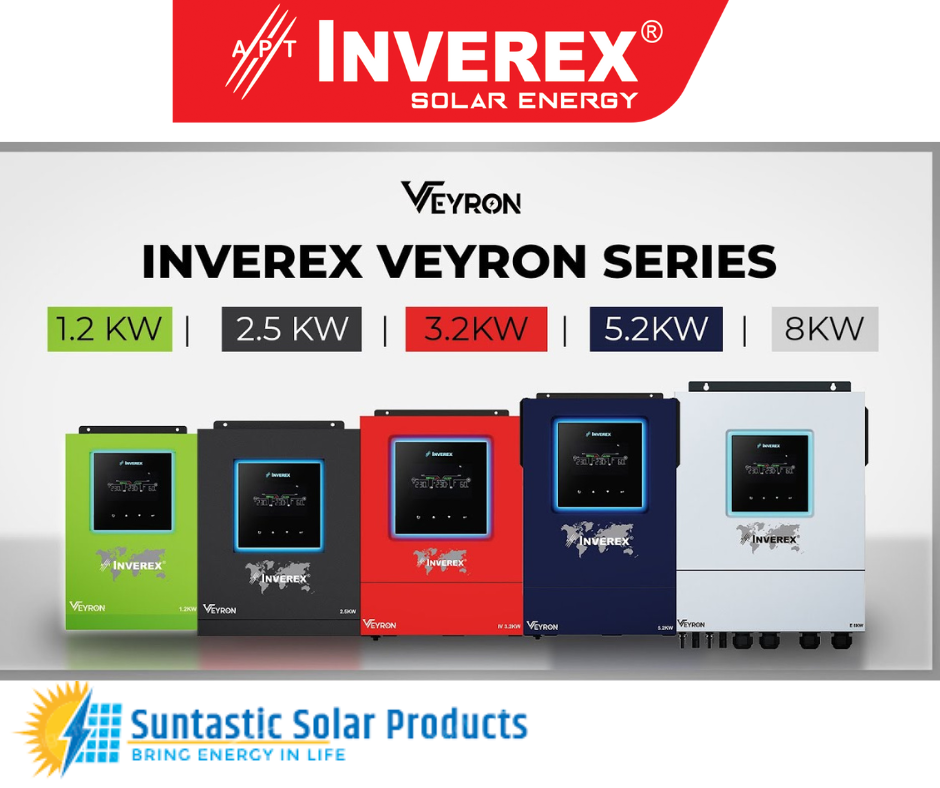
Inverex Inverter- A Detailed Study

A person who is looking to install solar system on his house or on his business must consider some best & affordable solar inverters.
Whenever a person searches to install solar system, there are only two things which matters.

  1. Solar Panels
  2. Solar Inverters

What does Solar panels do?

Solar panels takes light from the sun and convert heat energy into electrical energy.
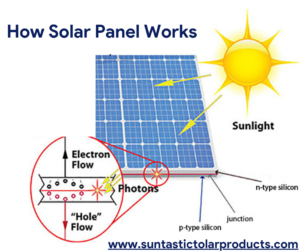
How Solar Panel works?

What is the function of a Solar Inverter?

Solar inverter is a device which which converts one form of current into other form of current.
When solar panels takes light from sun and make current it makes Direct Current (DC).
In our daily routine we use Alternating current (AC) in all kind of appliances.
So, Inverter just takes Direct Current from the solar panels and converts the form of current into to Alternating current.

Function of Solar Inverter

Types of Solar Inverter

Generally there are three types of Solar Inverters.

  1. On Grid Solar Inverter
  2. Off Grid Solar Inverter
  3. Hybrid Solar Inverter

On Grid Solar inverter works when there is local electricity generation is available. On Grid inverter converts DC into AC and provide it to electrical appliances of home.
Off Grid Solar inverters works where there is no local electricity available. The house has to run only on Solar system.
Hybrid Solar Inverters works where there is local power generation is available but people wants to store energy on batteries as power backup.
Based on all above three types there are many solar inverter brands available in market.
In this article we put our focus on Inverex inverter.
inverex inverter
Inverex is a renowned solar brand in Pakistan, who is not only famous for solar inverters but also manufacturing solar panels too.

Inverex On Grid Solar Inverters

Nitrox Series

Nitrox on grid inverter came in different capacities. It has following models

  1. Inverex 6 KW On-Grid Solar Inverter
  2. Inverex 10 KW On-Grid Solar Inverter
  3. Inverex 15 KW On-Grid Solar Inverter
  4. Inverex 20 KW On-Grid Solar Inverter
  5. Inverex 35 KW On-Grid Solar Inverter
  6. Inverex 50/75/100 KW On-Grid Solar Inverter

Properties

  • Maximum Efficiency of product 98.3%
  • Three(3) Phase Operating
  • Topology Transform less
  • AC Connection IP65 Rated Plug
  • High Power Factor
  • Zero Export
  • High Surge Endurance
  • IP65 Ingress Production
  • Dual Maximum Power Point Tracking Controller
  • 10 Years Warranty
Veyron Series

Inverex Veyron series has different models in stock and each model has its own properties.

  1. Inverex Veyron II 1200W-12V
  2. Inverex Veyron II 2500W-24V
  3. Inverex Veyron II 3200W-24V
  4. Inverex Veyron II 3200W-48V
  5. Inverex Veyron II 6000W-48V

Properties

  • Auto Synchronization with Inverex Lithium Battery
  • With Grid-Tie/Net Metering Option
  • No Zero Export Device Required
  • Optional Parallel Kit (Up to 9 Units)
  • Works Without Battery Directly On Solar
  • Built-In Anti-Dust Kit For Dust Protection
  • Conformal Coating for PCB Protection from Humidity
  • Built-In BMS & SOC based battery control
  • Built-in Grid Feeding
  • Up graded Model New Design
  • PV-WATTS SOLAR MPPT (Adjustment according to model)
  • Anti-Dust Kit
  • Works without Battery
  • 5 Years Warranty

Fronius Series

Fronius symo is one of the best inverter for irregular shaped roofs or multi-oriented roofs.

These are one of the most communicative inverters available in market.

It has further two types

Fronius Symo(5 to 20kw)
Fronius Eco (25Kw & 27Kw)

Properties

  • Snap Inverter Technology
  • Integrated Data Communication
  • Smart Grid Ready
  • Dynamic Peak manage
  • Zero Feed-In
  • 5 Years Warranty

Conclusion

Based upon all the above discussion, if you are thinking to buy a solar inverter for you. Its better to do a proper calculation about your load.

No inverter and solar panel will give you 100% efficiency there must be some losses, so you have to be very careful before making any kind of decision about the purchase.

One of the most important tip, Always buy inverter/solar panels from company’s prescribed shop/retailer so that in case of any complain in future they treat you well.

If you like this article please share it with your friends.

If you want me to add some thing in this article please feel free to write me at “suntasticsolarproducts@gmail.com”
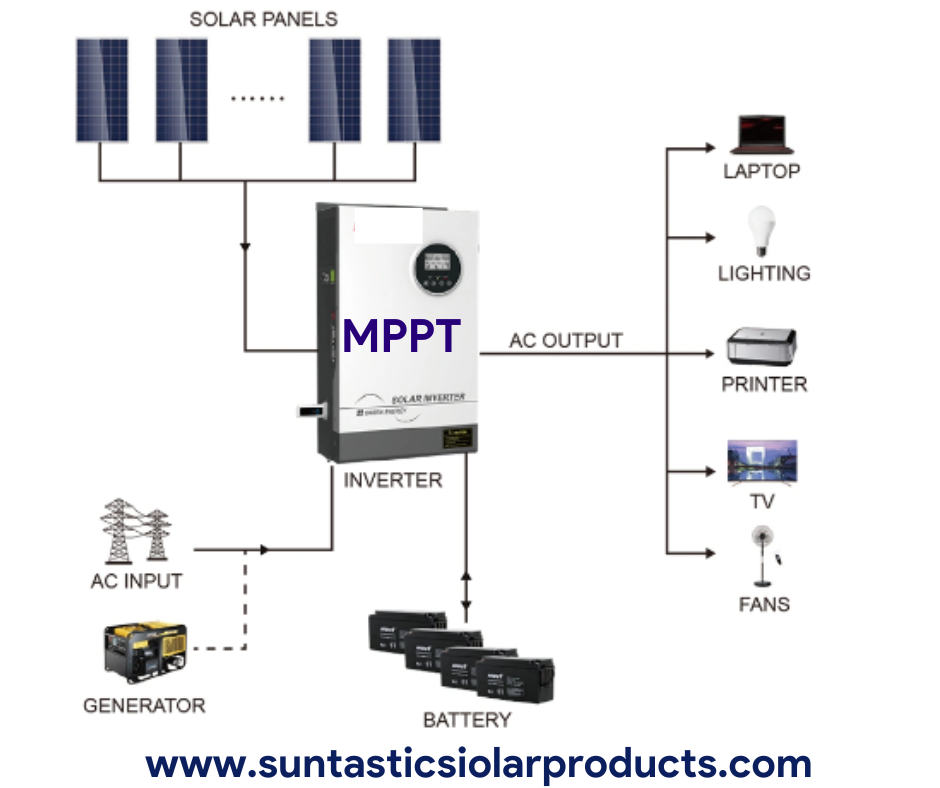
MPPT Solar Inverters: A complete guide about MPPT Solar

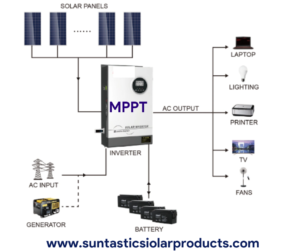
Are you looking to install a Solar inverter or MPPT Solar inverter and want to know how it work? Generally, a solar inverter is a device which converts DC (Direct Current) into AC (Alternate Current).

What is MPPT Solar inverter?

MPPT stands for “Maximum Power Point Tracking”. It is a feature in which the charge controller adjusts its power to provide maximum power.

mppt solar inverter

An MPPT (Maximum Power Point Tracking) solar inverter is a sophisticated device that converts the direct current (DC) electricity generated by solar panels into alternating current (AC) electricity.

What sets MPPT inverters apart is their ability to dynamically adjust their operating parameters to ensure maximum power output from the solar panels.

Among the key components of a solar power system, the MPPT solar inverter plays a crucial role in maximizing energy efficiency.

In this article, we will explore the concept of MPPT solar inverters, their advantages over traditional inverters, and the difference between MPPT and PWM technologies.

How Many MPPTs Does an Inverter Have?

The number of MPPTs in an inverter depends on its design and capacity. Typically, residential-scale inverters have a single MPPT, while commercial or utility-scale inverters may feature multiple MPPTs.

The number of MPPTs determines the flexibility of the system to accommodate different solar panel. It also configurations, orientations, and shading conditions, maximizing energy harvest.

Difference Between MPPT and Inverter

MPPT algorithms continuously monitor the voltage and current from the solar panels to dynamically adjust the operating point of the panels for maximum power extraction.

In simpler terms, the MPPT technology ensures that solar panels always operate at their maximum power point. Hence, resulting in higher energy yield compared to traditional inverters.

What is the difference between solar inverter and MPPT?

The main difference between a solar inverter and MPPT lies in their functionalities and purpose within a solar power system.

Solar Inverter

A solar inverter is an essential component of a solar power system that converts the direct current (DC) electricity generated by solar panels into alternating current (AC).That electricity that can be used to power household appliances, businesses, or fed back into the electrical grid.

Its primary function is to ensure compatibility between the DC electricity produced by solar panels and the AC electricity required for consumption.

Solar inverters are responsible for maintaining the voltage and frequency of the AC electricity within the required range. They also provide safety features such as anti-islanding protection, which disconnects the system from the grid during power outages to prevent potential harm to utility workers.

MPPT (Maximum Power Point Tracking)

MPPT, on the other hand, refers to a technology that is integrated into some solar inverters to optimize the efficiency and energy harvest of the solar power system.

Its purpose is to ensure that solar panels operate at their maximum power point under varying conditions.

Its algorithms continuously monitor the voltage and current output of the solar panels. It also dynamically adjust the operating parameters to maintain the panels’ maximum power output.

This includes tracking changes in temperature, shading, and panel degradation, and adapting the power conversion process accordingly.

By maximizing the power output of the solar panels, MPPT technology enhances the overall energy efficiency of the system.

Pros of MPPT Solar Inverters

  1. Increased Energy Harvest: MPPT solar inverters employ advanced algorithms to continuously track the maximum power point of solar panels. This ensures that the panels operate at their peak efficiency, resulting in higher energy production compared to traditional inverters.
  2. Flexibility in Panel Configuration: MPPT inverters often feature multiple MPPT inputs, allowing for greater flexibility in designing solar panel arrays. Different panels with varying orientations, shading, or even different types can be connected to maximize energy yield.
  3. Improved Performance in Partial Shading: MPPT technology excels in partial shading scenarios, where certain parts of a solar panel array are obstructed by objects like trees or buildings. By independently optimizing the power output of each panel, MPPT inverters minimize the overall impact of shading and maintain a higher energy output.
  4. Better Adaptability to Environmental Factors: MPPT inverters can adapt to changing environmental conditions, such as temperature fluctuations, dust accumulation, or panel degradation. By dynamically adjusting the operating parameters, they optimize power output and mitigate efficiency losses.
  5. Higher Overall Efficiency: Due to their ability to track the maximum power point, MPPT inverters achieve higher conversion efficiencies compared to traditional inverters. This means that a larger proportion of the solar energy captured by the panels is converted into usable electricity.

Cons of MPPT Solar Inverters

  1. Higher Cost: MPPT inverters tend to be more expensive than their PWM counterparts. The advanced technology and additional circuitry required for maximum power point tracking contribute to the increased cost of MPPT inverters.
  2. Complex Installation and Maintenance: MPPT inverters require proper installation and configuration to ensure optimal performance. The presence of multiple MPPT inputs and the need for accurate settings can make installation more complex, requiring professional assistance. Regular maintenance and firmware updates are also necessary to keep the inverter operating efficiently.
  3. Efficiency Reduction in Extreme Conditions: While MPPT technology excels in most conditions, extremely high temperatures can affect the efficiency of MPPT inverters. In such cases, heat management techniques and adequate ventilation are essential to maintain optimal performance.
  4. Limited Effectiveness with Small Installations: For small-scale solar installations with a limited number of panels, the benefits of MPPT inverters may be relatively modest compared to the additional cost. PWM inverters can provide a more cost-effective solution for these smaller systems.
  5. Potential Electromagnetic Interference: In rare cases, MPPT inverters can generate electromagnetic interference that may interfere with nearby electronic devices or radio communications. Proper grounding and adherence to electromagnetic compatibility standards during installation can help mitigate this issue.

Despite the few drawbacks, MPPT solar inverters remain a popular choice for maximizing solar energy harvest. Their ability to adapt to changing conditions, improve performance in shading scenarios, and achieve higher overall efficiency make them a valuable component of modern solar power systems.

Similar content

Solar Inverters
Top 10 types of Outdoor Solar Lights: Uses & Benefits